Marilla Cuthbert
Anne of AvonleaMarilla Cuthbert’s story in Anne of Avonlea is one of affection taking practical form: she makes room for two orphaned children, adapts her household as they grow, and eventually reorganizes it so Anne Shirley can pursue her education. Her care is rarely sentimental in manner. It appears instead in decisions about work, money, rooms, and who will be there when someone needs help.
Identity and Background
Marilla is a household manager who weighs obligations against the means available to meet them. When Mary Keith’s illness worsens, Marilla worries not only about Mary but about what will become of the twins. Their uncle, working in a lumber camp in British Columbia, cannot take them until spring; Mary is reluctant to ask neighbors to keep them for the winter. Marilla understands that Mary wants her to take the children, although Mary has not directly asked. The family connection is only through a third cousin, and Marilla initially regards that as a slender claim beside the substantial responsibility of caring for two six-year-olds.
Her reluctance is not indifference. Marilla lists the practical demands ahead: two children mean extra work, and because her eyes prevent her from sewing, Anne will have to make and mend their clothes. Anne dislikes sewing but agrees to do it as a duty if Marilla takes the children from duty. Their exchange establishes the arrangement’s character: Marilla’s decision affects the whole household, and care is shared through work as well as feeling.
Taking in the Keith Twins
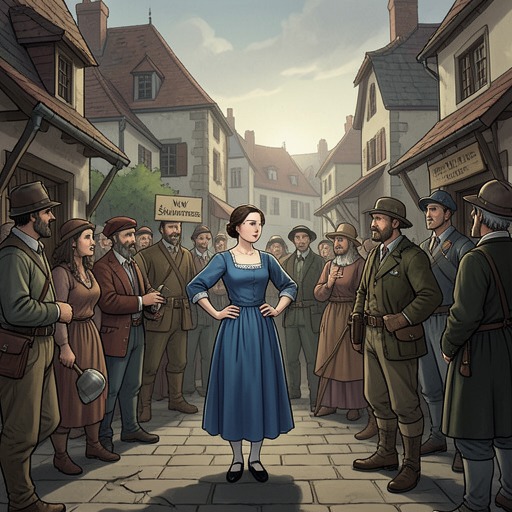
Marilla finally tells Anne that she will probably agree to Mary’s wish. In the chapter titled “Marilla Adopts Twins,” the responsibility becomes visible to Avonlea: returning from Mary’s funeral, Marilla brings the children home in her buggy. Rachel Lynde watches Davy Keith leaning over the dashboard and reaching for the pony’s tail while Marilla pulls him back; Dora Keith sits upright and prim beside them. Rachel thinks Marilla will have her hands full, but also recognizes that, under the circumstances, taking the twins was the humane choice. Anne’s skill with children is part of the support Marilla can count on.
The uncle’s first spring letter does not resolve the arrangement. He has been ill through much of the winter, his wedding has been postponed, and he asks whether the twins can remain until fall while he tries to make a home for them. Marilla agrees because, as she puts it, there is no other practical course. She also admits that the children are less trouble than before—or that the family has grown used to them—and notes that Davy has improved. Her restrained response lets relief show through the grimness: the temporary care has become familiar, and sending the children away is no longer an easy prospect.
Household Care and the Children’s Different Needs
Marilla’s home offers structure, but her judgment of the children grows more flexible through daily experience. Dora is industrious, neat, observant, and dependable in small tasks: she feeds chickens, picks up chips, wipes dishes, and runs errands. Davy is more heedless and forgetful, yet has a natural gift for winning affection; the narration notes that Anne and Marilla like him the better. Marilla’s care does not require her to pretend that the twins are alike. She sees their contrasting temperaments and lives with both.
Anne’s response to Davy’s confused account of heaven shows how Marilla’s household shares the work of guiding him. Davy has taken a story from another boy literally and believes heaven may be in an attic. Anne draws him onto her knee and patiently untangles the idea before Marilla returns from the garden with Dora, who has been helping pick peas. The contrast between Dora’s steady assistance and Davy’s imaginative confusion is part of the children Marilla is learning to raise; Anne’s remembered understanding of childhood complements Marilla’s care.
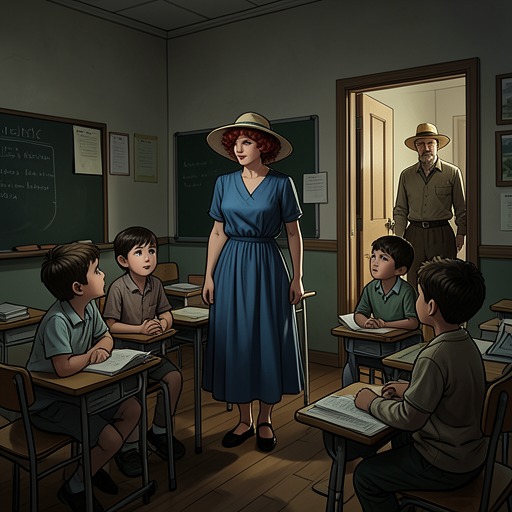
Marilla also has to decide what kindness should permit. When Anne gives Davy an old feather duster to make a headdress, Marilla says Anne spoils him. Anne replies that the other boys have headdresses and recalls how she herself longed for puffed sleeves when other girls wore them. Marilla’s education, the narrative observes, has made great strides, though she still worries that too many wishes indulged are bad for a child. She can acknowledge, however, that school has helped Davy: he gets into less mischief since beginning to attend, perhaps because he works off some of his energy with the other boys. The small domestic disagreement marks a change in Marilla’s outlook without making her abandon her concern for discipline.
From Temporary Care to a Permanent Home
The uncertainty ends through a letter, but not the letter Anne fears. A month after wondering whether the uncle will demand the twins’ return, the household learns that he has died of consumption. His will leaves two thousand dollars to Marilla in trust for Davy and Dora until they come of age or marry, with the interest to be used for their maintenance. Anne feels sorrow for the dead man and relief that the children can stay. Marilla responds in her practical register: the money makes their care possible as the twins grow older. The rent from the farm is barely enough to maintain the house, and she had been determined not to spend Anne’s money on them. She had wanted to keep the children but could not see how to afford it; the trust removes that obstacle.
The inheritance thus confirms what the household’s daily life has already begun to establish. Marilla’s care is not simply an affectionate preference: it requires a sustainable arrangement, and she distinguishes the twins’ provision from Anne’s savings. The will gives the children financial support while leaving Marilla responsible for their home and upbringing. Her earlier caution and her eventual relief belong together; the desire to keep them is real, but so is her insistence that affection must be made workable.
Making Room for Anne’s Future
Marilla’s care also changes the future she can offer Anne. When Anne says she cannot attend Redmond College because Marilla’s eyes, though better, and the twins still require attention, Marilla answers that she has always felt Anne ought to go and has never been comfortable with the thought that Anne gave up her education for her sake. Anne has saved enough for one year, and money from the sale of the stock can cover another; scholarships may help beyond that. Marilla’s support makes clear that keeping Anne at home is not the measure of her love.
The remaining difficulty is practical. Rachel Lynde is distressed because the mortgage on the Lynde farm, taken out years earlier to help a son start out west, has left little equity after years of interest payments; Thomas Lynde’s illness has added to the costs. Rachel expects the farm to be sold and fears leaving Avonlea to live with Eliza. Marilla proposes that Rachel move in. She imagines giving her the north gable as a bedroom and the spare room as a separate kitchen, where Rachel can put her stove and furniture and live independently. Marilla would provide the house room; Rachel would bring companionship and help with the twins, whom Marilla cannot manage in every respect.
By discussing the plan with Anne before asking Rachel, Marilla treats both women as participants in a shared household rather than assuming that a generous offer settles every question. Anne tells her to ask, relieved that Rachel may not have to leave Avonlea. Marilla’s arrangement frees Anne to go to college while giving Rachel a home and the twins additional care. At the novel’s turn toward Anne’s next stage, Marilla’s characteristic generosity is therefore also a form of practical foresight: she makes a future possible by reorganizing the home she has built.